
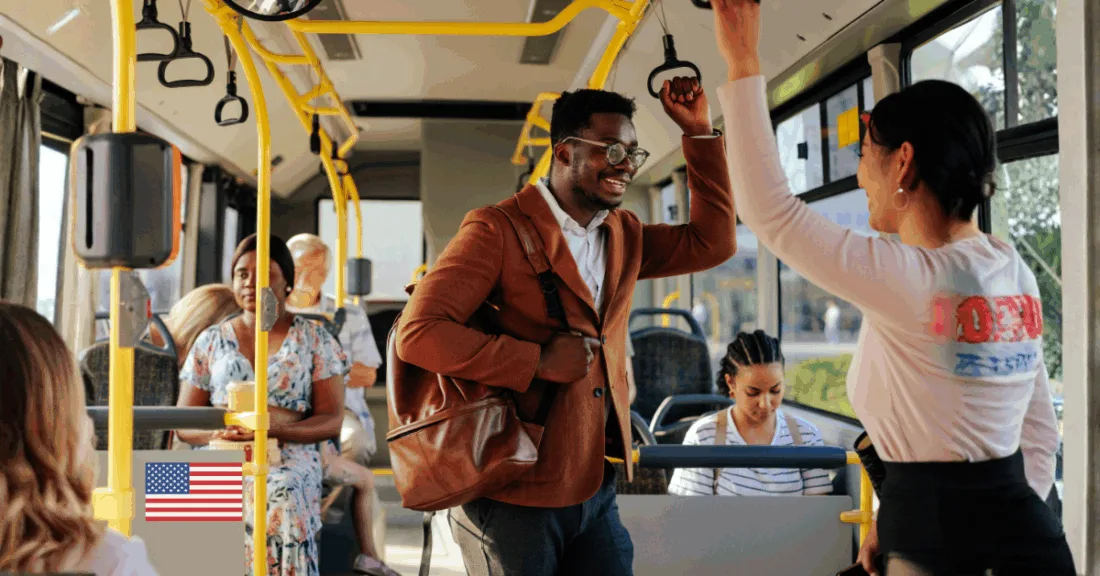
What’s the point of missionaries in America? Anthony*, one of our Summer Interns, makes the case for a missions need you may never have heard:
“I think you probably agree that the need for long term missionaries in the US is crazy. You probably agree that most Americans have heard about Jesus during their lifetime. I have been in the United States for only 4 years and I used to agree with that statement too.”
Anthony grew up as a Christian missionary kid, but came home to the US as a young adult for college. He goes on to say why he’s changing his mind on global missions strategy.
“I think it is logical to say that America is a reached country. However, 2 months as a Summer Intern in New York City with International Project was more than enough time for me to observe and experience that this 21st century globalized world has many cities filled with people yet to hear about Jesus.”
Because Jesus has called us to share the Good News of salvation to all nations (Matthew 24:14), we have to find ways to minister to the least reached ethnic groups. And one of the most strategic ways for those groups to hear the Gospel is from missionaries in the US.
So, who do missionaries in America minister to? Why do missionary work in the USA?
Why Missionaries in America Are Essential
Missionary work in the USA is important because Unreached People Groups (UPGs), especially those from places closed to traditional Christian missions, have people, dispersed outside their homelands, living among us.
Many UPGs can’t hear the Gospel in their home country, but God has brought them here to hear the Gospel from us.
We consider a people group unreached when there is no indigenous community of Jesus’ followers able to engage this people group with church planting. Technically speaking, in a UPG less than 2 percent of the population actively follows Jesus.
Anthony acknowledges, “Even though the United States, as a whole, remains reached. Most know the name of Jesus Christ and His ‘story.’”
But many cities in this country have groups that are part of the least reached. This creates a huge need for a different kind of missionary work in the USA—one focused on evangelism and discipleship with these specific groups right here on American soil.
Cross Cultural Ministry in the US
America is home to a vast diaspora—groups of people who have migrated from their homeland to live in a foreign country. Due to widespread global migration, a unique evangelistic opportunity exists for those God calls to missionary work in the USA.
You don’t have to go on a mission trip to the Congo to find people who have never heard of Jesus. You can show the love of Christ to UPGs in America who previously had little or no access to the Gospel in their home nations.
New York City is a prime example of this phenomenon. “New York City has 3.3 million foreign born immigrants, from more than 150 countries, who comprise nearly 40% of the city population.”1 Among the many diaspora groups, those from countries where Islamic, Hindu, or Buddhist religions are widely practiced represent significant UPGs.
In many UPG regions around the world, American or Christian missionaries cannot enter the country as evangelists or even as bivocational missionaries. In some places, being a Christian is illegal.
So, how do we get the Gospel to all nations and every tribe? We focus on mission work to engage diaspora UPGs living in urban centers in Europe and North America.
Anthony’s Experience with Missionaries in the US
Anthony continues with his own experience in missionary work in the USA:
“For example, I am working among the people of Bangladesh in New York City and have made many Bangladeshi friends. There are approximately 100,000 to 200,000 Bangladeshis, who live just in my area.”
We confirmed and he’s correct. The Bangladeshi born immigrant population alone in the New York Newark Jersey City area is estimated at over 120,000, making it the largest concentration of Bangladesh born people in the United States.2
A study found 53% of the Bangladeshi diaspora population age 5 or older had limited English proficiency.3 This need creates a natural open door for missionaries in America to help them learn English. Our missionaries offer English conversation groups that often naturally turn into spiritual conversations about the Bible.
Anthony admits, “As a long term missionaries’ kid who grew up in another culture, I know how intimidating the local culture can seem to a foreigner. This intimidation and discomfort causes these foreigners to get together in small areas and build a community that feels more like ‘home.’ We see this with Bangladeshis in the neighborhood I work in. These homes, even though they are in America, do not have much American influence. Even though they live in a ‘reached’ country, these people remain ‘unreached.’”
This reality underscores why we need dedicated missionaries in America—it takes intentionality and commitment to enter these distinct, often isolated, communities.
Local churches and congregations may struggle to engage UPG communities, but strategic, innovative cross cultural workers can!
Our Strategy for Missionary Work in the USA
Really, there is not anyone to “blame” for this situation. But there is a need to raise the awareness level of this situation and the need for long term missionaries in the US.
Anthony shares the challenges and the essential nature of cross cultural engagement:
“It is uncomfortable for both Americans and Bangladeshis in New York City to learn each other’s culture. It is even more uncomfortable to be spending time in each other’s communities. Whenever I am at a Bangladeshi restaurant with my teammates, it surprises me, every time, that we are the only non Bangladeshis in a restaurant in New York City – not in Dhaka, Bangladesh.”
Our strategy involves training missionaries in America making the deep, relational commitments necessary to overcome these barriers. This includes a commitment to cultural humility and language learning.
Anthony goes on, “What is even more uncomfortable is learning each other’s language.” He can easily put himself in the shoes of the diaspora, as he was a missionary kid growing up, “As minorities in a foreign country, we must learn English to survive and thrive. However, you might be surprised how much it means to us when someone cares enough to want to learn our language.”
Our mission here at International Project is to train and mobilize long term missionaries who are willing to make this kind of cross cultural investment right here in the USA.
Effective Missionaries in America
Anthony continues, “As I interact with Bangladeshis, I am seeing more and more need of workers – long term missionaries, bi vocational missionaries, and short term missionaries. The need for missionaries in America is urgent. Many parts of New York City remain unreached. People down the street and next door have never had anyone sit down with them. They have never heard of the freedom of grace through Jesus Christ in their lives.”
People of the unreached world are coming to us, the United States (and also Europe!). New York City and other gateway cities need commitments from our brothers and sisters in Christ to become long term missionaries, focused on sharing Jesus with diaspora UPGs.
Here is what it will take for the Christian church to spread the Good News of Jesus Christ to all nations. Our missions organization strategy follows several key methods to reach these diaspora communities:
Broad Gospel Sowing
This involves initiating spiritual conversations and sharing the Gospel with individuals in public settings to find people open to hearing the Gospel. From street evangelism to outreach efforts, it’s about listening well, asking thoughtful questions, and casting a wide net.
You can learn more about our outreach and evangelism methods on our NYC short term missions trips!
Disciple Individuals and Groups to Jesus
We invest in sharing more about Jesus with those who show interest, often inviting them to gather groups to learn more through Discovery Bible Studies. Studying the Bible together with non believers is an effective way to introduce them to Christ.
In fact, our Discovery Bible Study method has the spiritually curious sharing Bible stories even before they commit to Christianity.
Teach Diaspora Peoples to Share the Gospel
When a person chooses to follow Jesus, our discipleship emphasizes the Great Commission and encourages new believers to immediately share the Good News with their own family and friends.
This mobilizes UPG cultural insiders as organic missionaries, allowing the Gospel to travel across cultural and geographic barriers, empowered by the Holy Spirit. UPG believers not only gather their own people dispersed in their city, but also some take the Gospel back to their homelands.
Initiate Church Plants through Indigenous Leadership
The ultimate goal is to see new followers of Jesus from Unreached People Groups to start new churches, guided by their own indigenous leadership.
We focus on discipling and mentoring cultural insiders who can then bring the Gospel to their home communities. This is how we get the Good News of Jesus Christ into closed countries. It is how we get the Gospel to the ends of the earth.
Missionaries in the USA
Anthony concludes, “Yes, it is crazy! Yeah, it is crazy how people here, around us, are in urgent need to hear about Jesus Christ. It is crazy how the need here is unknown or ignored. It is crazy how many Unreached People Groups there are in the United States. It is crazy how long term missionaries need to work in New York City and other cities to reach Unreached People Groups.”
How is God calling you to get involved?
Could He be calling you to join one of our long term ministry teams as a full time missionary? Can you see yourself sharing the Gospel and church planting among diaspora Unreached People Groups in one of our ministry locations?
If God may be calling you to missionary work in the USA, sign up for more info about our Equip Missionary Training Program.
Answer God’s call and prepare for the mission field!
Sign Up For More Info
Get Missionary Training Program Details and Next Steps!
We respect your privacy.🔒 Your email will only be used to send Equip Missionary Training info and our related updates—unsubscribe anytime!
*Name changed for security
Sources
1 https://www.pewresearch.org/short-reads/2025/08/21/key-findings-about-us-immigrants/
2 https://comptroller.nyc.gov/reports/our-immigrant-population-helps-power-nyc-economy/
3 https://iir.gmu.edu/immigrant-stories-dc-baltimore/bangladesh
4 https://www.aafederation.org/wp-content/uploads/2020/12/2019bn.pdf